Where the dirty water goes: how a curbside bin wash works
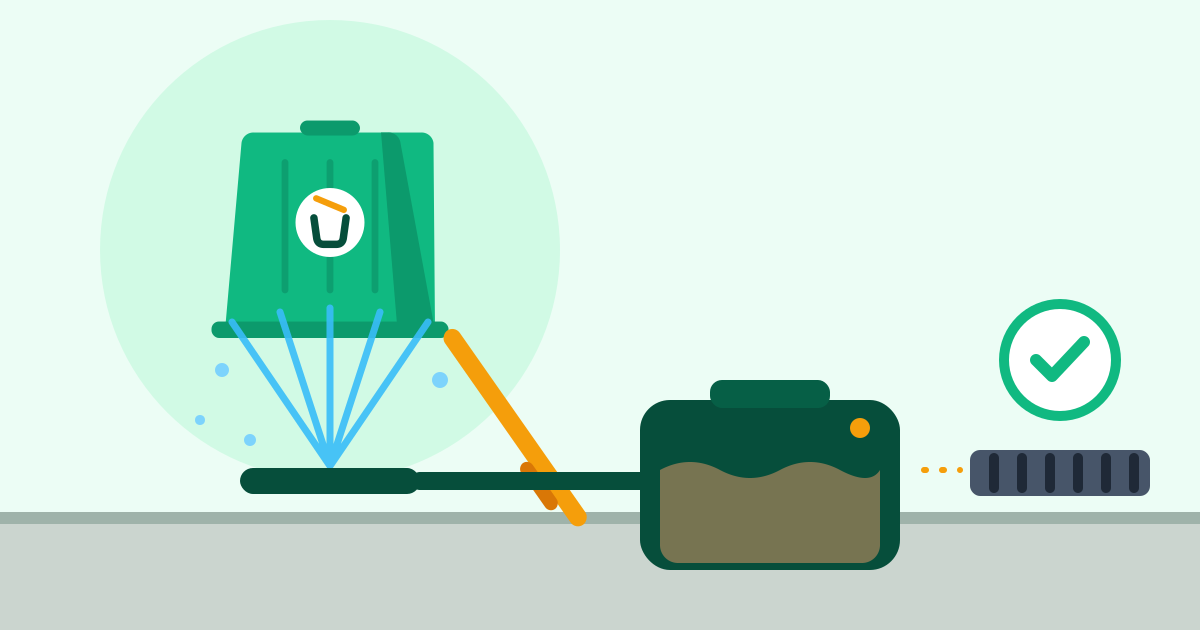
The obvious question about a bin cleaning service is whether the bin comes out clean. The better question is where everything that came off it ends up. A single dirty bin can hold a surprising amount of rotten liquid, food residue and bacteria, and a wash turns all of it into water that has to go somewhere.
Why the street drain is the wrong answer
The grates along the curb look like they lead to a treatment plant, but in many neighbourhoods they do not. Storm drains are built to move rainwater off the street as quickly as possible, and in a lot of areas that water flows to a nearby stream or river with little or no treatment along the way. Hosing a bin out on the driveway sends the same mix of food waste, grease and bacteria straight down that path.
One bin on one afternoon does not sound like much. A whole street doing it every few weeks, all summer, adds up. That is why a curbside wash that does not deal with its own water is only doing half the job.
How the wash itself works
A proper wash happens right after collection, when the bin is empty and still at the curb. The bin is lifted and turned upside down over a washing head, so gravity does part of the work and nothing pools inside. Hot water under high pressure spins across the walls, the bottom and the underside of the lid, where residue collects and dries into a crust that a garden hose cannot move.
Heat matters as much as pressure. Hot water softens grease and dried food so it rinses off instead of smearing around, which is also why the wash is quick: a few minutes per bin rather than a long scrub. After the wash comes a sanitizing rinse to deal with the bacteria that water alone leaves behind, and a deodorizer so the bin smells neutral when it goes back in its spot.
Catching the water
This is the part you do not see from the window. Everything that runs off the bin is collected underneath and pumped into a closed tank on the truck, together with the solid bits that come loose. Nothing is left running down the driveway or into the gutter.
At the end of the route, the solids are separated out and the water is filtered before it is disposed of through the appropriate channels. It is a less photogenic step than a gleaming bin, but it is the step that makes the whole service responsible rather than just convenient.
What that means for you
From the homeowner's side, the process is almost invisible. You put your bins out for collection as usual, and when you bring them back in, they are clean, dry enough to use and smell like nothing at all. There is no puddle on the driveway and nothing sticky left on the curb.
If you ever wash your bins yourself between visits, the same logic applies on a smaller scale. Do it on the lawn or gravel rather than the pavement, use a biodegradable soap, and keep it well away from the street grate. The bin is only half the story; the water is the other half.